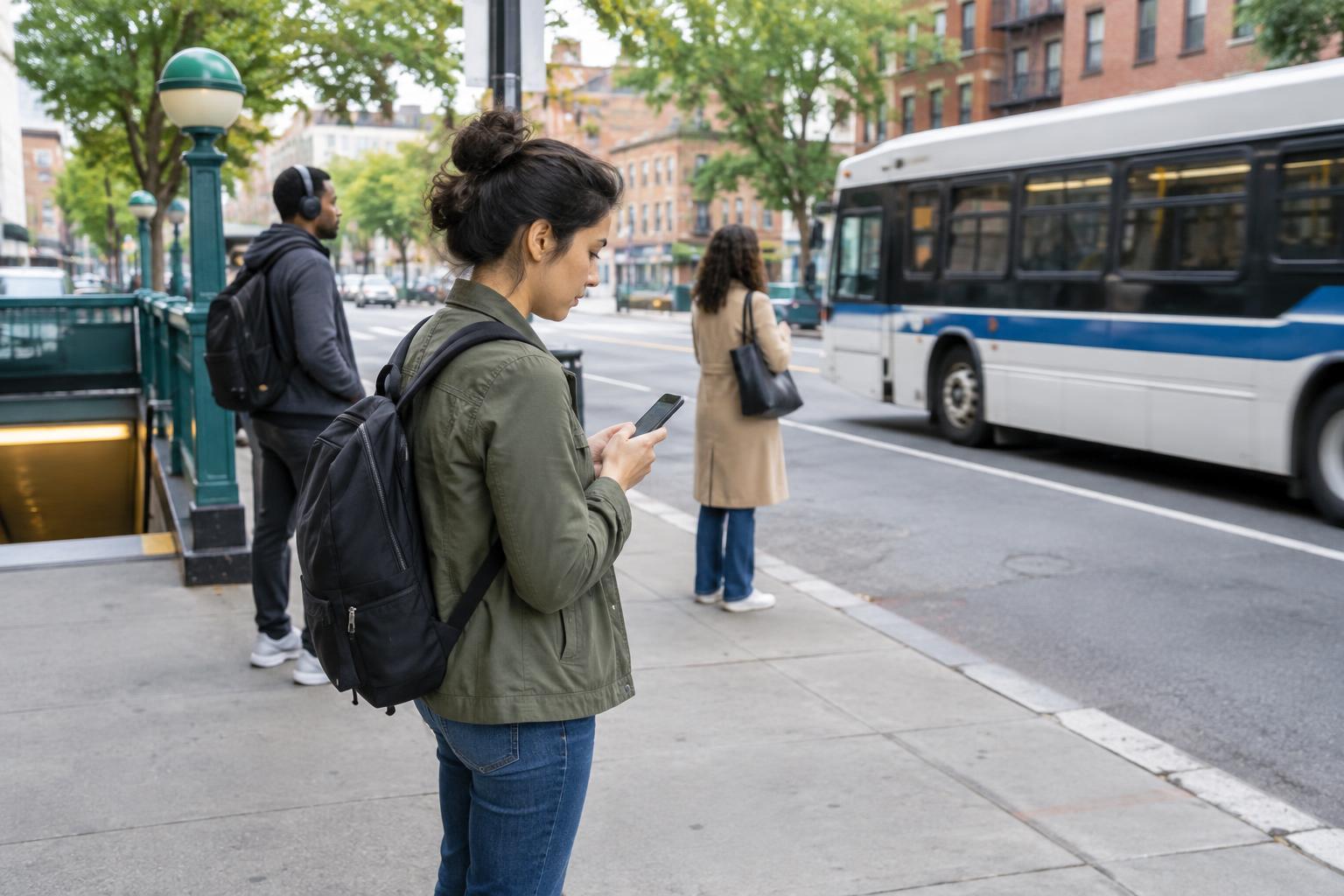
Start with what makes a route work for you
The shortest route is not always the easiest one. A direct walk might include a steep hill, a crowded crossing or an entrance with steps. Before opening a map, decide what matters most for this particular trip. You may need step-free access, a smooth surface, audible crossing signals, fewer transfers, places to sit, or a quieter stretch of street. If you are traveling with a stroller, luggage or someone else, include their needs too.
Separate essentials from preferences. A working lift may be essential, while avoiding a busy block might be preferable but negotiable. This distinction helps when you need to compare imperfect options. It also keeps route planning focused: rather than asking whether an entire neighborhood is “accessible,” you can ask whether a specific journey will work for you.
Check the journey one segment at a time
Break the trip into four parts: getting from your starting point to the street or transit stop, traveling between areas, reaching the destination block, and entering the building. A route can look suitable on a map but fail at the last doorway. Check the destination’s entrance before committing to the trip, especially if its accessible entrance may be on another street or inside a shared lobby.
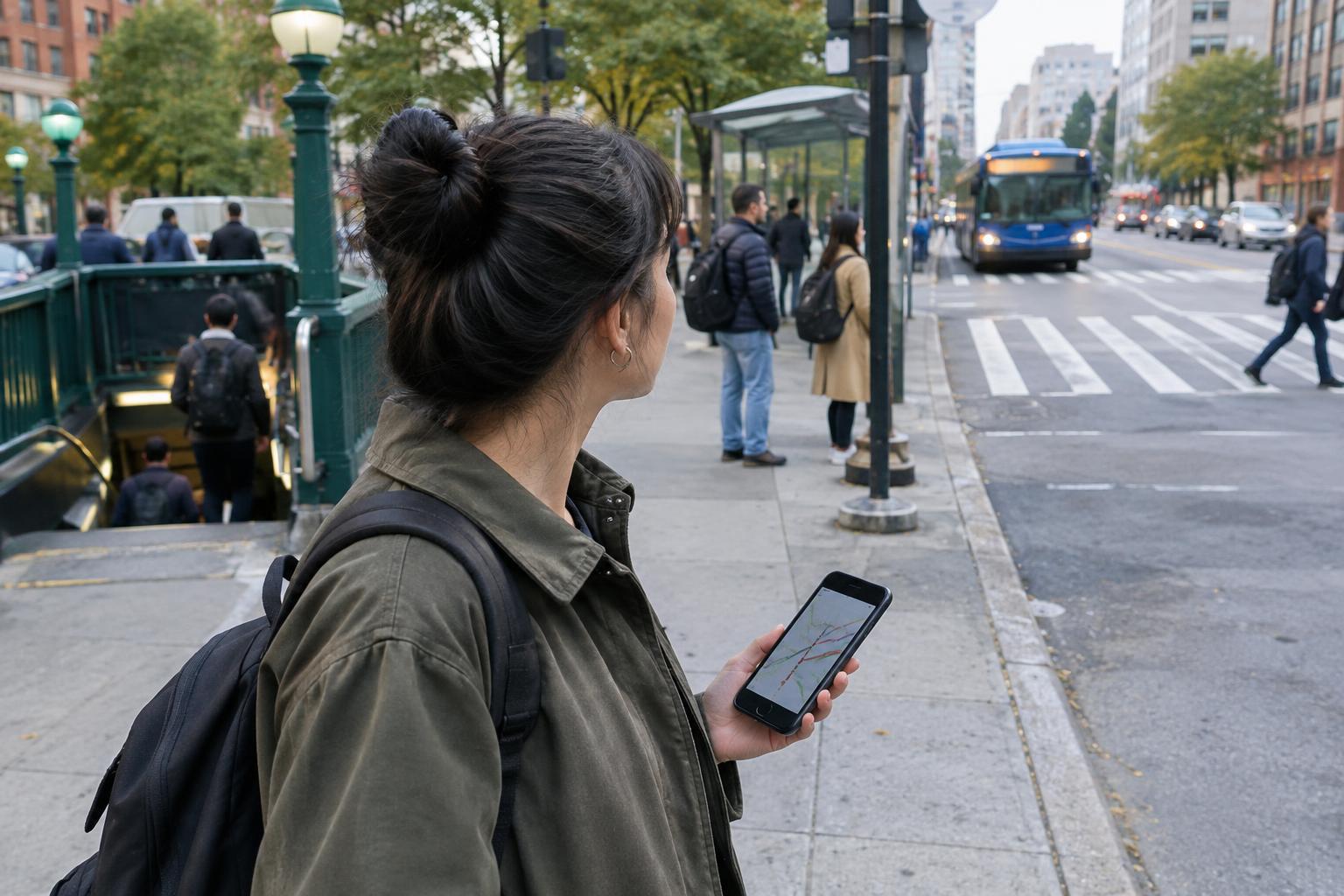
Digital maps can help you compare distances and locate crossings, but their accessibility details may be incomplete or out of date. Where available, use street-level images to look for curb ramps, sidewalk width, slopes and places where a path narrows. Images are clues, not guarantees: construction, parked vehicles and temporary closures can change the situation. For a trip where an obstacle would be hard to navigate, contact the venue or transit provider to confirm the details that matter most.
Look closely at crossings and transit links
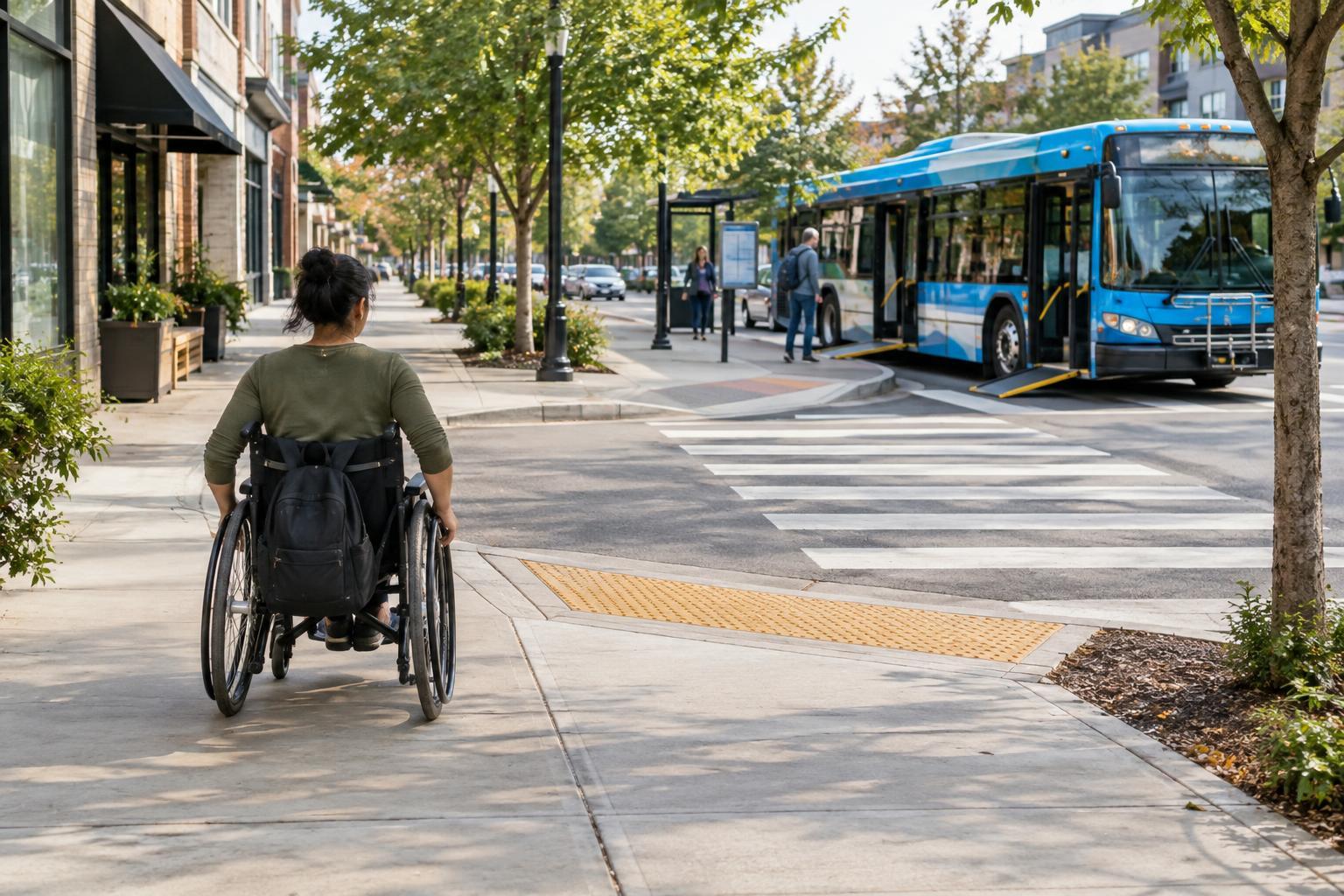
Street crossings deserve their own check. A block may have a usable sidewalk but no convenient way across the road at the end of it. Look for crossings that connect the sides of the street you need, and consider whether turning traffic, complex junctions or long waits could make the crossing difficult. A slightly longer route with simpler intersections may be more comfortable than a shorter route with repeated detours.
If transit is part of the journey, check the complete connection rather than only whether a station or vehicle is described as accessible. The stop you enter, the stop you leave, lifts or ramps along the way, and the distance to your destination all matter. When possible, check service information shortly before departure; a lift or entrance that is usually available may not be usable on the day. Leave time for transfers so a delay does not turn a manageable route into a rushed one.
Plan for comfort as well as access
A route can be technically passable and still be exhausting. Think about the total distance, not just the longest individual segment. Identify useful pause points such as a public seating area, a library or a café you already know. If you need a restroom during the trip, check whether one is available and suitable rather than assuming you will find one along the way.
Conditions also affect how a route feels. Rain can make some surfaces slippery, heat can make an exposed walk harder, and peak commuting times can make narrow paths or transit stops crowded. You do not need to plan for every possibility, but choosing a time of day and a route that give you room to move can make a meaningful difference.
Keep a backup and improve your personal map
Choose one fallback before leaving: a parallel street, a different transit stop, or a place where you could pause and reassess. Save the destination’s contact details and any entrance instructions where you can find them easily. If the trip involves a time-sensitive appointment, allow enough flexibility to change course without having to make every decision in a hurry.
Afterward, note what you learned. Record which entrance worked, where the sidewalk became difficult, how long a transfer felt, and whether a rest stop was useful. A few practical notes are more valuable than a perfect-looking route that has not been tested. Over time, they can turn familiar parts of the city into a set of dependable journeys—and make planning an unfamiliar one less daunting.