Buying organizers before understanding the problem
Matching baskets can make a shelf look orderly, but they do not create a useful system on their own. If you buy containers before sorting what you own, you may end up with bins that are too small, too deep, or difficult to fit into the space. The result is often a tidier-looking version of the same clutter.
Start with one problem area, such as the entryway or kitchen counter. Group similar items, remove anything that belongs elsewhere, and notice what remains. Then measure the usable space, including shelf height and the room needed to pull a container out. Use a box or bag you already have to test the arrangement for a week. If it works, you will know what size and type of organizer is worth considering.
Storing things far from where they are used
In a small home, an empty cabinet can be tempting even when it is on the wrong side of the room. But storage that adds extra steps to a routine is hard to maintain. Mail placed far from the door may collect on a table instead; cleaning supplies stored behind several other items may never make it back after use.
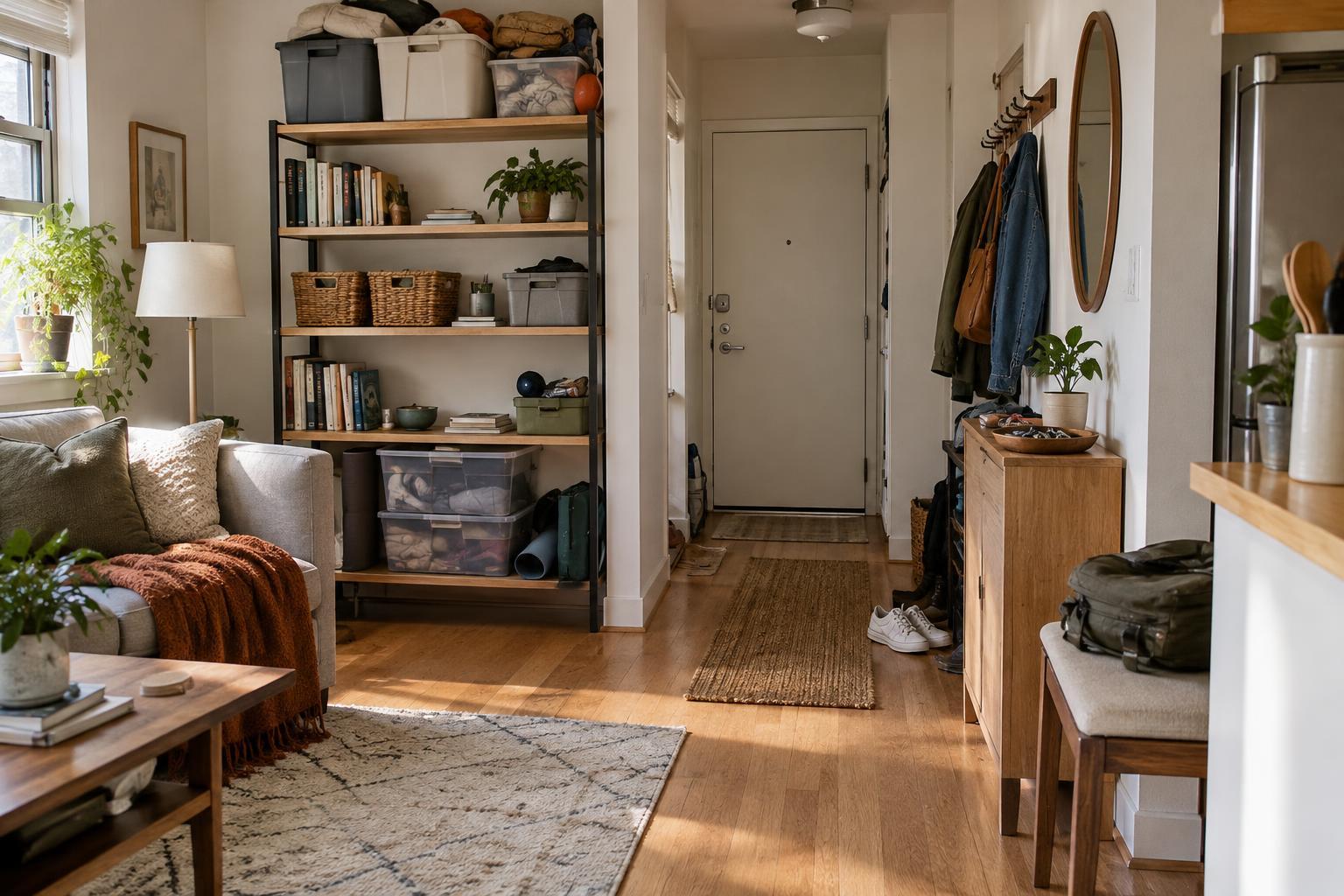
Give frequently used objects a home near the activity they support. Keep keys and a bag by the exit, cooking tools near the place you prepare food, and hobby supplies where you can sit down to use them. Less-used items can go in harder-to-reach spots. If something repeatedly lands outside its assigned place, treat that as information: the assigned place may need to move.
Using every inch, including the space you need to move
Vertical storage can help, but filling a wall from floor to ceiling is not automatically efficient. A high shelf is a poor home for something you need every morning. Likewise, furniture with drawers loses much of its value if there is not enough clearance to open them. Storage should make a room easier to use, not turn ordinary tasks into an obstacle course.
Before adding hooks, shelves, or a larger cabinet, check the paths through the room and the reach of doors and drawers. Put light, occasional-use items higher up and heavier or everyday items at a comfortable height. Leave some open space on shelves so objects can be returned without rearranging an entire stack. In a rental, check what changes are permitted before attaching anything to a wall.
Hiding clutter without making it retrievable
Closed storage can calm a busy-looking room, but opaque boxes and overfilled drawers can become places where things disappear. When finding a spare charger requires opening six containers, it is easier to buy another one than to use what you already have. That is a sign the storage system needs clearer categories, not necessarily more capacity.
Keep categories specific enough to be useful: one container for charging cables is easier to navigate than a general electronics box. Label containers that are not opened often, and avoid stacking the ones you need regularly. For small objects, dividers or a few shallow containers may work better than one deep bin. The goal is to see or reach an item without emptying everything above it.
Expecting a perfect arrangement to maintain itself
Even a well-planned system can fail when there is no place for items in transit: a package waiting to be returned, a book borrowed from a friend, or laundry that needs a quick repair. Without a temporary spot, these objects spread across clear surfaces and make the whole home feel unfinished.
Choose one modest holding area and review it regularly so it does not become permanent storage. Then make a brief reset part of an existing routine: return items to their zones, clear the entryway, and check whether any container has become difficult to close. When a category keeps overflowing, consider whether its space is too small, its location is inconvenient, or some contents are no longer useful. Small adjustments made as habits change are more practical than trying to design a perfect system once.