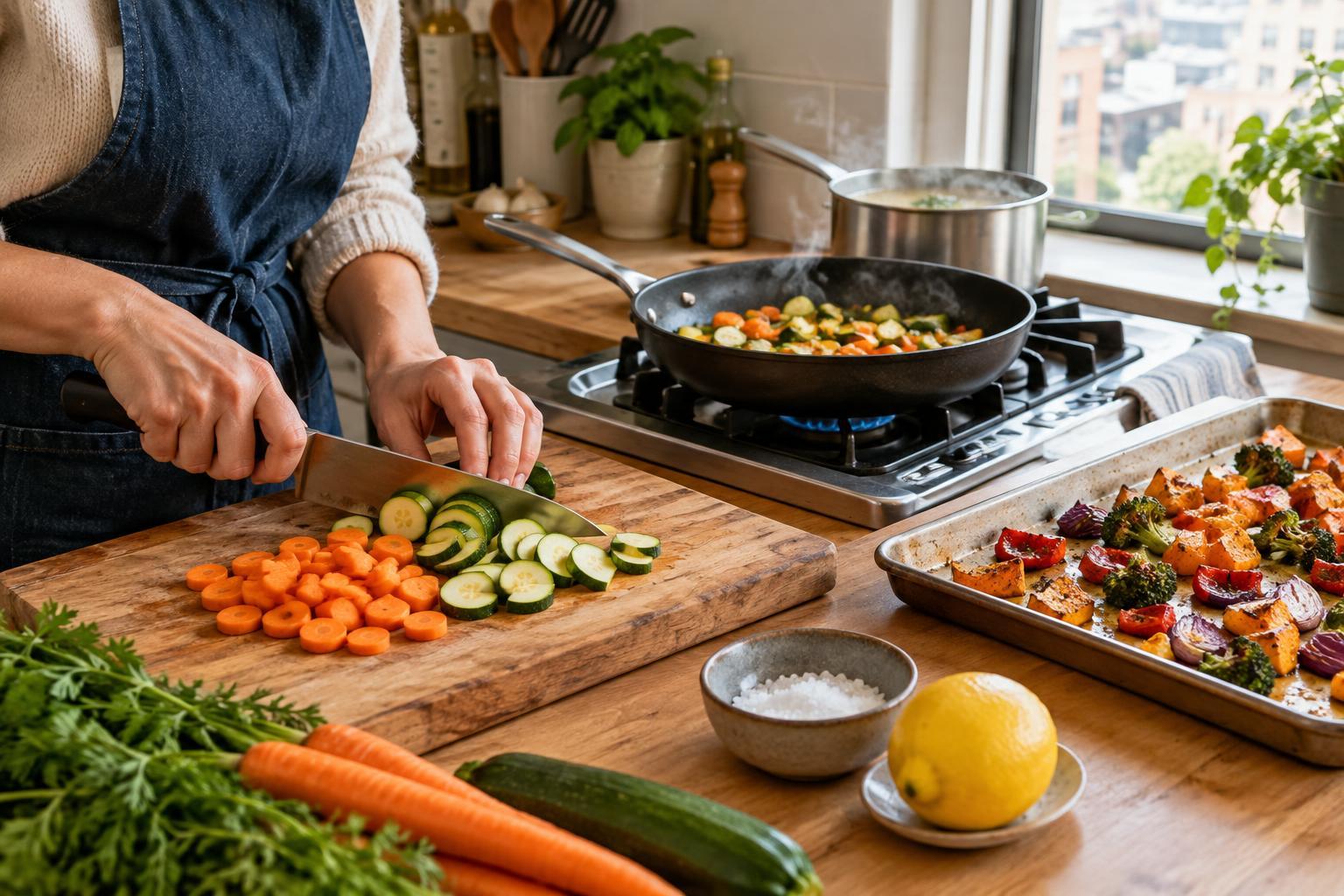
1. Chop ingredients into consistent pieces
Before turning on the stove, practice preparing one ingredient at a time. Pieces of similar size tend to cook at a similar rate, so aim for consistency rather than speed or perfect shapes. A cutting board that stays in place, a sharp knife, and an uncluttered work area make the task easier. Keep your fingertips tucked back as you hold the food, and work slowly enough to stay in control.
Start with a vegetable you use often, such as a carrot, onion, or bell pepper. Cut it into pieces for one meal, then notice which pieces are much larger or smaller than the rest. There is no need to master every knife cut: being able to prepare ingredients steadily and with less waste is the useful first step. Once chopped, set the ingredients aside in separate bowls or small piles so they are ready when the pan heats up.
2. Sauté over manageable heat
Sautéing means cooking food in a pan with a modest amount of fat, usually while stirring or turning it. It is a practical way to cook vegetables and build the base of a meal. Beginners often use more heat than they need. Start at medium heat, add a little oil, and wait until it moves easily across the pan before adding food. If ingredients darken before they soften, lower the heat.
Try sautéing a single layer of sliced mushrooms or chopped peppers. Listen for a gentle sizzle and leave the pieces alone briefly before stirring; constant movement can make it harder to see how they are changing. If the pan is crowded, cook in batches. Afterward, compare the texture of pieces cooked for different lengths of time. That observation will help you decide when to add firmer or quicker-cooking ingredients in future meals.
3. Simmer instead of boiling everything
A simmer is a gentle cook in liquid, with small bubbles breaking the surface. It suits soups, sauces, beans that are already cooked, and many one-pot meals. A vigorous boil can evaporate liquid quickly or break delicate ingredients apart. To find a simmer, bring the liquid to a boil, then turn down the heat until the bubbling calms. Check the pot occasionally, especially if the lid is off.
A simple practice dish is a tomato sauce made with canned tomatoes and sautéed onion. Let it simmer while you stir now and then, noticing how the sauce thickens and the flavors come together. If it becomes thicker than you want, add a splash of water. This teaches you to adjust a dish as it cooks rather than treating the recipe’s timing as the only sign that it is ready.
4. Roast with space on the tray
Roasting uses the oven’s dry heat to cook food and develop browned edges. For a straightforward first attempt, toss evenly cut vegetables with a little oil and spread them across a baking tray. Leave some space between pieces. When a tray is packed tightly, moisture has less room to escape, and the vegetables may soften without browning much.
Try one vegetable at a time so you can learn how it behaves. Check it partway through cooking and turn the pieces if one side is browning faster. A fork can help you judge tenderness, while the color of the edges tells you whether more roasting would add flavor. Ovens and piece sizes vary, so these signs are more useful than expecting every tray to finish at exactly the same minute.
5. Taste and season in small steps
Seasoning is not just adding salt at the end. It is the habit of tasting a dish, identifying what seems missing, and making a small adjustment. A pinch of salt can bring flavors forward; a little lemon juice or vinegar can brighten a dish that tastes flat. Add a small amount, stir, and taste again before adding more. You can usually add seasoning more easily than you can remove it.
Practice with a finished pot of soup or a tray of roasted vegetables. Taste a bite as it is, then season a small portion and compare. Ask whether you want more savoriness, brightness, or simply more time for the ingredients to cook. This habit connects all five techniques: careful preparation and cooking give you a good starting point, while tasting helps you make the final meal your own.